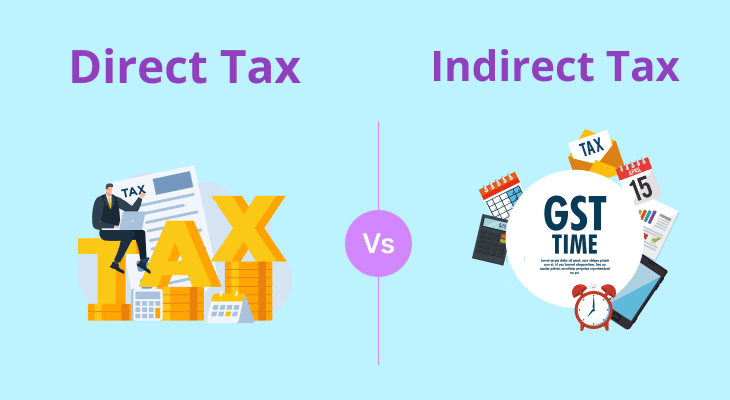
Meaning, advantages and advantages of direct and indirect taxes
What is Direct Tax?
A Direct Tax is a tax that is paid directly by individuals or organizations to the government. The burden of this tax cannot be shifted to someone else.
Key features of Direct Tax
Levied directly on income, profit, or wealth
Burden falls on the taxpayer only
Based on the ability-to-pay principle
Progressive in nature (higher income = higher tax rate)
Examples of Direct Tax
Income Tax
Corporate Tax
Capital Gains Tax
Securities Transaction Tax (STT)
Wealth Tax (now abolished, but historically an example)
Advantages of Direct Tax
Reduces inequality because of progressive rates
Promotes social justice
Ensures stable income for the government
Helps curb inflation, as higher taxes reduce excess money supply
Disadvantages of Direct Tax
High tax rates may discourage investment
Tax evasion is possible if proper monitoring is not done
Compliance and documentation can be complex for some taxpayers
What is Indirect Tax?
An Indirect Tax is a tax that is collected by intermediaries (shopkeepers, manufacturers, service providers) but ultimately paid by the final consumer. The burden of the tax can be shifted.
Key features of Indirect Tax
Levied on goods and services
Paid indirectly through higher prices
Same rate for all, regardless of income
Regarded as regressive in nature
Examples of Indirect Tax
Goods and Services Tax (GST)
Customs Duty
Excise Duty (mostly replaced by GST except for a few products like liquor and petroleum)
Value Added Tax (VAT) (still applicable on petroleum products in many states)
Advantages of Indirect Tax
Easy to collect
Covers a large population, increasing government revenue
Encourages savings (because consumption is taxed)
Convenient for consumers as it is included in the final price
Disadvantages of Indirect Tax
Regressive: affects poor and rich equally
Increases the price of goods and services
Can increase inflation
Revenue may fluctuate based on market demand
Conclusion
Understanding the difference between Direct Tax and Indirect Tax helps individuals and businesses make informed financial decisions. While direct taxes ensure fairness, indirect taxes ensure simplicity and wider coverage. A balanced combination of both is essential for a growing and inclusive economy like India.

 Live Test